November 06, 2026
Why S1 REIT invests in Kyiv’s income-generating real estate — Viktor Boichuk at UIBC 2026 + SEPTEMBER FEST
#S1 REIT
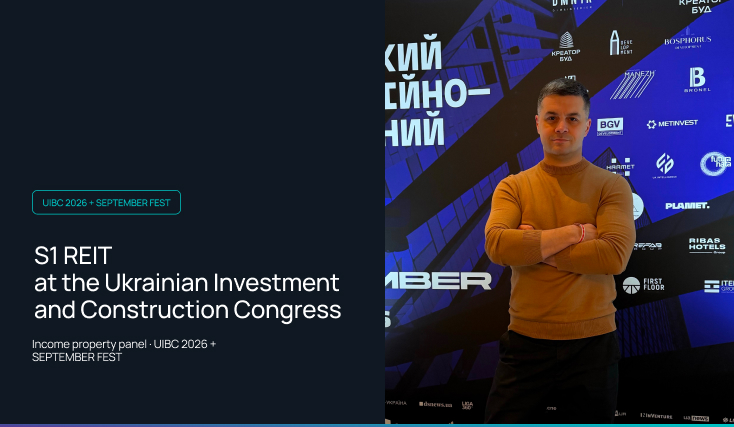
On November 5, Hyatt Regency Kyiv hosted UIBC 2026 and SEPTEMBER FEST. S1 REIT Chief Commercial Officer Viktor Boichuk took part in a panel discussion on income-generating real estate alongside Serhii Ratushnyi, co-owner of Green Rest, Illia Sahaidak, CEO and co-owner of Circle, and Yuliia Karandiuk, Lead Investment Expert at Ribas Invest.
The panelists discussed what drives demand for urban rental housing, aparthotels and resorts, how professional management affects performance, and which risks investors should consider. Viktor Boichuk explained why S1 REIT continues to invest in Kyiv and how the city’s real estate generates returns for its funds.
What Drives Rental Demand in Kyiv
Demand varies by property type. Resort hotel occupancy depends on tourist flows and seasonality. In cities, demand for rental housing and retail space comes from everyday needs. People need places to live near work or school, and businesses need premises close to their customers.
Kyiv remains Ukraine’s economic center. It is home to major companies, universities and government institutions. This supports demand for residential and commercial real estate even during the war.
At the same time, security risks are changing how people choose where to live. According to Viktor Boichuk, tenants increasingly ask how a building was constructed, whether it has backup power, and which services remain available during outages.
How the S1 VDNG Fund Generates Returns
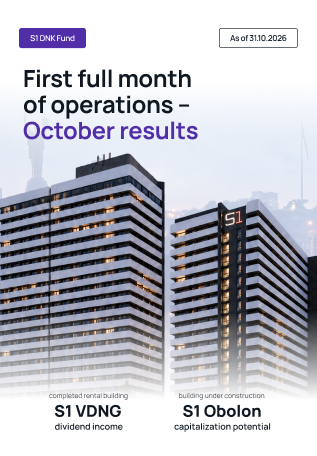
During the panel, Viktor Boichuk highlighted S1 VDNG, S1 REIT’s first fund. Its portfolio includes apartments in a Kyiv building designed for long-term rentals. Rental income provides the cash flow for dividend payments, while changes in property values affect the overall investment return.
In October, the fund accrued UAH 7.96 in dividends per investment certificate. The sale of S1 VDNG certificates has ended, and the fund continues to pay dividends.
“The S1 VDNG fund’s actual annual return was around 16% in US dollar terms, including capital appreciation. About half of that return came from dividends funded by rental income, and the other half came from the increase in property values following the 2025 revaluation,” Viktor Boichuk explained.
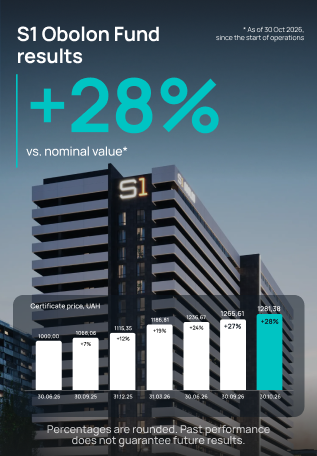
S1 REIT funds invest in operating rental properties, properties under construction, and commercial premises. For investors, the distinction is when returns may begin to materialize and what drives them.
How Much Do You Need to Start Investing in Real Estate?
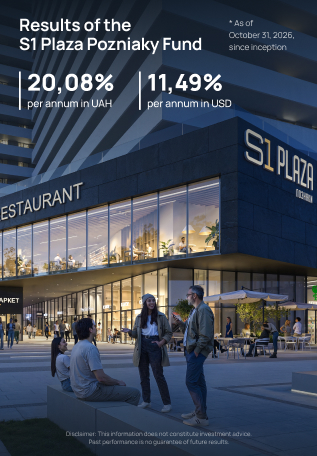
The panel also discussed how to make real estate investing more accessible. Viktor Boichuk explained that investors can get started with a modest amount through S1 REIT funds. For example, the initial investment in either S1 Pozniaky or S1 Plaza Pozniaky is around UAH 1,000. The exact amount depends on the price of the investment certificates.
By purchasing investment certificates, investors gain exposure to the real estate in the fund’s portfolio, while the management company handles the day-to-day management of the assets.